
 Free Consultation

If you work in supply chain, finance, legal, or operations, you have probably had a familiar sinking feeling lately. You are spending more, building more, adding more “backup” options, and somehow the system feels more fragile, not less. Plants get added, suppliers are duplicated, routes multiply, and inventories grow. But when pressure hits, it still feels like everything could seize up with one bad decision or one policy change.
In this blog, we will talk about how what is being sold as “de-risking” is often closer to operational panic than careful design. Frictionless globalization is unwinding, but not because executives sat down with a clean sheet of paper and redesigned the system. Instead, it is happening through rushed reactions: duplicate networks, safety stock, upstream acquisitions, and a growing compliance machine. The outward story is resilience. The lived reality, in many cases, is that you built a factory you cannot properly use.
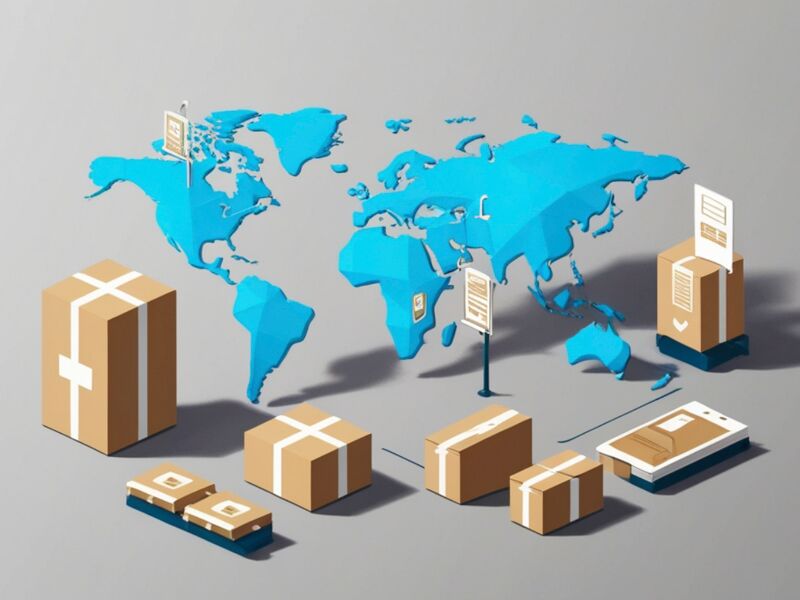
Cracks In Globalization
For years, the dominant playbook was simple: concentrate production where labor, land, and logistics were cheap; ship globally; and let scale compress unit costs. Political risk, sanctions, and export controls were treated as edge cases that could be handled with a few legal clauses and some alternate routing.
That assumption broke down. Trade tensions, technology controls, pandemics, and conflicts all hit within a relatively short window. The result was not a calm, strategic reset, but something closer to a scramble. Firms that had spent decades optimizing for speed and cost suddenly had to prove they could survive closed borders, sanctions lists, and licensing rules they had never had to read before.
Instead of one clear design question—“Where is the most efficient place to produce this?”—companies found themselves juggling several, often conflicting, questions:
- Where will regulators be comfortable with our footprint?
- Where can we still compete on cost?
- Where might today’s ally become tomorrow’s source of friction?
Under that pressure, many networks evolved through a series of defensive moves. The system changed, but not always in ways that reflected a long-term vision of resilience.

Panic Over Strategy
The word “de-risking” sounds thoughtful and measured. In reality, a lot of what has happened inside global firms looks much more reactive. The sequence is familiar: a new rule or shock hits, a region suddenly looks less safe, and leadership demands immediate action. Capacity is shifted, new suppliers are onboarded, stock levels are raised, and compliance teams get more tools and more work.
Each move can be justified in isolation. The problem is how they interact. Four patterns show up repeatedly when you look across industries:
- Duplicated supplier networks split by geography and politics.
- Much larger buffers of inventory to cover 90 to 180 days of disruption.
- Vertical moves upstream so that companies own more of the process and the audit trail.
- Significant spending on compliance software, audits, and databases, often reaching 2 to 3 percent of revenue.
On a slide deck, this can be presented as a robust, diversified, well-governed system. Inside the organization, it often feels like a network made heavier and more expensive in a very short amount of time. Costs rise, complexity increases, and no one is quite sure whether the underlying risk has truly fallen or just moved somewhere less visible.
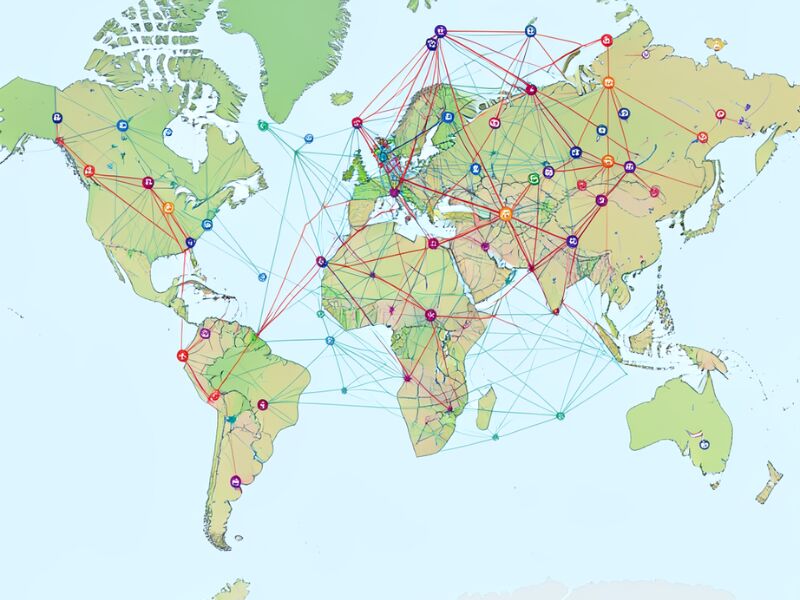
Duplicate Supply Networks
One of the clearest signs of this shift is the rise of parallel supply networks. Many U.S. multinationals now operate a “margin network” and a “compliance network” at the same time.
- The margin network still leans heavily on China or other historically low-cost hubs. It delivers the best unit economics but is vulnerable to tariffs, export controls, and political tension.
- The compliance network routes volume through places like Vietnam, Mexico, or other “friend-shored” locations that look better in a risk report but often come with higher costs and slower ramp-up.
On paper, that looks like diversification. In practice, it often means neither network runs at ideal scale. Plants and suppliers in both systems sit partially loaded. Cost of goods sold rises because fixed costs spread over thinner volumes. Yet shutting either side down feels dangerous:
- Turn off the original network and you lose price competitiveness.
- Turn off the alternate network and you look exposed to the next round of sanctions or trade friction.
So both stay open, both stay underused, and operational teams are left trying to balance contradicting messages: “hit cost targets” and “stay away from certain locations,” even when those instructions pull in opposite directions.
Stockpiles And Frozen Cash
Another common response to geopolitical and regulatory pressure is to stretch safety stock far beyond pre-crisis norms. Where many firms once held a few weeks of critical parts, some now aim for three to six months, especially for components they fear could be caught up in export controls or shipping disruptions.
Short-term, these buffers provide real comfort. A sudden disruption or border closure is less likely to shut down production immediately. But there are trade-offs that eventually show up in the numbers:
- Working capital is locked up. Funds that could have funded new products, automation, or market expansion become pallets on warehouse shelves.
- Obsolescence risk climbs. The more specialized the item, the greater the chance it will be redesigned, regulated differently, or replaced before the stockpile is fully used.
- Forecasting becomes murkier. When pipelines are padded with months of inventory, it is harder to distinguish real demand shifts from noise in ordering patterns.
The organization becomes better at surviving short, sharp shocks and worse at staying nimble over longer horizons. You pay for resilience in the form of frozen cash and a persistent risk that the buffer itself ages out.
Factories As Documentation Assets
A quieter but significant shift is happening upstream. In some industries, companies are not just adding capacity because they expect higher future demand. They are buying or building upstream facilities to control the audit trail.
By owning more of the early stages, raw material processing, component manufacturing, or key sub-assemblies, firms can generate the documentation required to show regulators and customers that:
- No banned regions or entities are buried somewhere in the supply chain.
- Labor and environmental standards meet agreed thresholds.
- Sensitive technologies are handled only in approved ways and locations.
In this environment, a plant can function less as a pure production asset and more as a proof asset. Its value lies in the ability to produce clean, defensible records about where inputs come from and how they are transformed.
The drawback is obvious: if the facility is in a higher-cost region or is designed around audit needs rather than throughput and flexibility, it can be difficult to run it at full commercial potential. It becomes part manufacturing site, part regulatory shield. On a balance sheet it is an asset; in daily planning, it can feel like an obligation you cannot simply walk away from, even when the economics are weak.

Compliance As A Hidden Tax
Alongside physical changes, the compliance footprint inside many organizations has expanded dramatically. Entire teams now focus on traceability, sanctions, trade controls, and documentation. They work with increasingly complex software platforms, audit cycles, and data repositories.
Spending 2 to 3 percent of revenue on this combined ecosystem is not unusual, especially in heavily regulated sectors. That includes:
- Platforms that track supplier risk, product origin, and restricted party lists.
- Regular external audits of facilities and partners.
- Internal staff whose main job is to assemble, check, and defend documentation.
This investment is not wasted, regulators, insurers, and banks increasingly expect it. But it does behave like a resilience tax. Unit costs are pushed up slightly across enormous volumes, and those costs are hard to reverse. Teams also find themselves split between two goals that are both non-negotiable:
- Hitting financial and operational targets.
- Staying within evolving political, legal, and ethical constraints.
Over time, the organization can feel less like a system optimized for customers and more like a system optimized to avoid being on the wrong side of a policy change or investigation.
Living With Unused Capacity
When you put these shifts together, duplicate networks, large stockpiles, upstream documentation factories, and an expanding compliance layer, the picture becomes clearer. The system is more robust against specific shocks, but it is also heavier, more expensive, and more dependent on political conditions it does not control.
Unit costs in some configurations climb 15 to 20 percent compared to pre-crisis baselines. Subsidy programs encourage building factories in higher-cost regions because the financing looks attractive in the short term. Yet if the policy environment shifts, those same plants can quickly turn into stranded assets,capacity that is technically available but economically awkward or politically constrained.
Risk has not disappeared; it has moved. Concentration has shifted from familiar hubs to newer, less tested nodes that might buckle under stress. Competitors who are not subject to the same “resilience tax” can underbid in neutral markets. And for some U.S.-based multinationals, the most unpredictable force in their supply chains is no longer a distant government, but volatility in their own domestic policy cycle.
The core challenge is to stop confusing motion with strategy. Building for resilience is necessary. Doing it through uncoordinated moves that leave you with factories you cannot fully use, inventory you are afraid to run down, and documentation systems you barely understand is not. The hard work now is to separate what truly reduces risk from what merely looks reassuring in the short term.
FAQs: Cost, Capacity, And Real Resilience
Q1. What does “you built a factory you cannot use” actually mean in practice?
It describes capacity that exists largely for political or regulatory reasons, rather than because it fits the economics of the business. That might be a plant in a high-cost location chosen mainly to satisfy local content rules or subsidy conditions, or a facility optimized around documentation and audits rather than efficient production. The factory can run, but it is rarely loaded to its potential and often carries higher unit costs than the rest of the network.
Q2. Is duplicating suppliers across countries always a bad idea?
Not at all. Having genuine alternatives is essential in a world of sanctions, trade disputes, and sudden disruptions. The risk comes when duplicate networks are built reactively and then left half-utilized, without a clear view of total cost or a defined role in different scenarios. Used thoughtfully, parallel networks can increase options. Built in a rush and left unmanaged, they can simply add complexity and cost without proportionate risk reduction.
Q3. How can a company start reducing this “resilience tax” without exposing itself?
A practical first step is to map major decisions—duplicate factories, long stockpiles, upstream acquisitions, big compliance programs—against the specific risks they are meant to cover. For each, ask: Which events would make this investment indispensable, and how likely are those events? Where do protections overlap? That exercise usually reveals assets that function more as comfort signals than as real options. From there, companies can begin to simplify, repurpose, or phase out certain structures, while keeping the measures that genuinely improve their ability to operate through disruption.