
 Free Consultation


Remote Online Notarization changed where notarization can happen. Artificial intelligence is beginning to change how efficiently the surrounding workflow can be managed.
That distinction matters.
A notary still performs the notarial act. The signer still appears before the notary. Identity still matters. Willingness still matters. The document still needs to be reviewed carefully. Legal advice still belongs to attorneys, not notaries or software. But around that core process, AI-enhanced workflows can reduce administrative friction, improve preparation, help organize documents, and make the signing experience smoother for clients, attorneys, businesses, real estate professionals, and private individuals.
For New Jersey clients using Remote Online Notarization, commonly called RON, the goal is not to replace professional judgment. The goal is to remove preventable confusion before the appointment begins.
A remote notarization can fail or be delayed for simple reasons. The document may be incomplete. The signer may not have proper identification ready. The wrong person may have scheduled the appointment. The receiving party may not accept RON. Witnesses may be required but not arranged. A document intended for foreign use may also need apostille authentication after notarization.
AI-enhanced RON workflows can help identify those issues earlier, so the notary appointment is not wasted.
Efficiency Begins Before The Session
Many notarization problems happen before the notary ever meets the signer.
A client sends a document but does not explain where it will be used. A law firm requests a remote notarization but forgets to mention that witnesses are required. A business executive uploads a corporate authorization but the signature block does not match the name on the identification. A family sends a power of attorney intended for use overseas without confirming whether the receiving foreign authority accepts remote notarization.
These are workflow problems, not just notary problems.
AI-enhanced systems can help by improving intake. They can prompt the client for missing details, organize uploaded documents, flag incomplete information, and help route the matter based on document type. For example, an intake workflow may ask whether the document is for real estate, estate planning, business, healthcare, school, immigration, banking, or foreign use. It may ask who prepared the document, who will receive it, whether witnesses are required, and whether the signer has valid identification.
This kind of preparation helps everyone.
For clients searching AI-enhanced remote online notarization, efficient RON services in New Jersey, or online notary appointment preparation, the real value is not that AI “does” the notarization. It is that the process becomes more organized before the session begins.
The notary can then focus on the notarial act instead of untangling avoidable administrative confusion.
Document Sorting Can Save Serious Time

Remote Online Notarization often involves more than one document.
A real estate seller may have affidavits, disclosures, and closing forms. A business owner may have a board resolution, corporate power of attorney, and officer certificate. An estate planning client may have a trust-related certification, power of attorney, or healthcare document. A family handling international paperwork may have several documents requiring notarization before apostille processing.
Without organization, these documents can become messy quickly.
AI-assisted workflows can help sort, label, and categorize documents before the appointment. They may help identify which documents appear to require notarization, which documents appear to be supporting records, and which documents may need additional review by the client’s attorney or receiving institution.
This does not mean AI should decide whether a document is legally valid. It should not draft legal conclusions or replace professional review. But as an administrative tool, AI can help reduce manual sorting and improve clarity.
For notary teams, that can save time. For clients, it can reduce back-and-forth messages. For attorneys and business professionals, it can help ensure the signing package is easier to review before the appointment.
Long-tail keywords such as AI document review for remote online notarization, RON workflow for business documents, and online notary services for multiple document packages reflect a growing need: people want speed, but they also want fewer mistakes.
Better Scheduling For Busy Signers
RON is especially useful when the signer is not easily available for an in-person appointment. That often means the signer is busy, traveling, working across time zones, caring for a family member, or dealing with an urgent transaction.
Scheduling then becomes a major part of the service.
AI-enhanced workflows can help streamline scheduling by collecting key information upfront. Who is signing? Where is the signer located? What time zone are they in? Does the document need to be completed today? Is the receiving party waiting? Does the signer need to upload identification before the appointment? Are there multiple signers?
Instead of long message chains, a smarter workflow can guide the client through the required steps.
This is especially useful for executives, attorneys, real estate clients, and high-net-worth individuals whose schedules do not fit neatly into ordinary office hours. A remote notarization can only be efficient if the signer arrives prepared.
People searching remote online notarization for busy executives, same-day RON services for legal documents, or virtual notary appointment in New Jersey often need a process that respects time. They do not want to spend the appointment discovering what should have been handled earlier.
AI can support that preparation by making the pathway clearer.
Identity Preparation Matters
Identity verification is central to notarization. In a RON session, the signer must be ready to complete the identity process required by the platform and applicable rules.
That means the signer needs proper identification, a stable internet connection, access to the required device, and a setting where they can participate clearly.
AI-enhanced workflows can help educate the signer before the appointment. Instead of waiting until the session begins, the system can provide reminders about acceptable identification, lighting, camera access, internet connection, document readiness, and the need to avoid signing too early.
This type of preparation can prevent failed sessions.
For example, if a signer does not have identification ready, the appointment may need to be rescheduled. If the signer already signed a document that required notarization at the time of signing, the document may need to be reissued or re-signed. If the signer cannot access the platform properly, the session may be delayed.
A professional Remote Online Notarization service should never treat identity preparation as a minor detail. It is part of the integrity of the entire process.
Searches like secure identity verification for remote online notarization, online notary with ID verification, and RON services with signer preparation show that clients increasingly understand the importance of getting this step right.
AI Can Improve Communication Without Replacing Humans
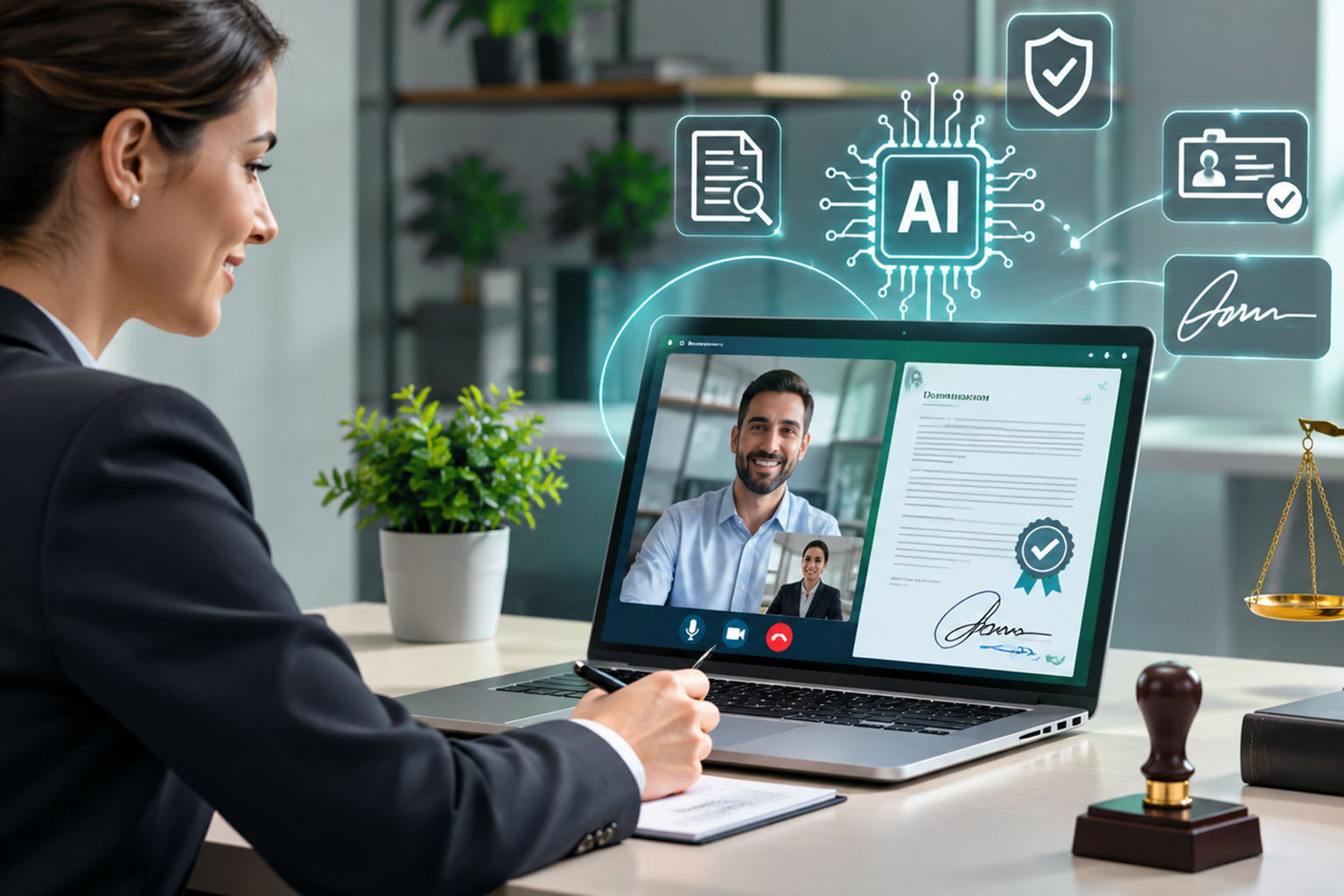
One of the biggest frustrations in document services is unclear communication.
Clients often do not know what to send, when to sign, whether a witness is needed, or whether the document is acceptable for RON. Attorneys may need status updates. Businesses may need confirmation that the signer completed the appointment. Families may need guidance on the difference between notarization and apostille authentication.
AI-enhanced communication tools can help answer routine questions, organize instructions, and keep clients informed. They can provide checklists, appointment reminders, document upload prompts, and status updates.
But human judgment still matters.
A chatbot should not give legal advice. It should not decide whether a power of attorney is valid. It should not determine whether an estate planning document is appropriate. It should not promise that a foreign authority will accept a document. Those questions require attorneys, receiving institutions, or qualified professionals.
Used correctly, AI improves communication by handling routine administrative steps while allowing the notary team to focus on the matters that require experience.
For clients searching AI-powered online notary services, remote online notarization support for law firms, or RON appointment status updates, the best experience is a balance: technology for efficiency, people for judgment.
Law Firms Benefit From Cleaner Intake
Attorneys often need notarization support after legal work has already been completed. The document is drafted. The client has approved it. The signature is the remaining step.
A messy signing process can still create problems.
AI-enhanced RON workflows can help law firms by improving intake consistency. A firm can submit the document package, identify the signer, note the receiving party, confirm whether witnesses are involved, and explain any special instructions. The workflow can collect that information in a structured way instead of burying it in scattered emails.
This helps with estate planning documents, affidavits, real estate documents, business authorizations, litigation statements, and transaction records.
For attorneys searching RON services for law firms in New Jersey, remote online notarization for attorney-prepared documents, or virtual notary services for legal clients, efficiency depends on avoiding surprises. A structured intake process helps the notary understand the assignment before the appointment begins.
It also protects the attorney-client relationship. The notary does not explain the legal meaning of the document. The attorney handles legal advice. The RON provider supports the execution process after the document is ready.
Business Documents Need Workflow Discipline
Business documents often involve titles, entity names, signing authority, supporting resolutions, deadlines, and outside recipients. A small inconsistency can delay acceptance.
A corporate officer may sign with one title while the resolution uses another. The company name may appear differently on the document than in the certificate of formation. A foreign bank may require a specific notarial certificate. A distributor may need the document apostilled after notarization.
AI-enhanced workflows can help identify administrative issues that should be reviewed before the appointment. They can prompt the client to confirm the company name, signer title, destination, recipient, and whether the document is for domestic or foreign use.
Again, AI should not decide legal authority. But it can help make the process less chaotic.
For companies searching remote online notarization for corporate documents, RON services for business powers of attorney, or online notary for international business documents, this kind of workflow discipline is valuable. The signing appointment should not be the first time anyone notices that the officer name, entity name, or destination country has been left unclear.
Better preparation reduces delays after the signature.
RON And Apostille Workflows Can Connect
Many clients confuse notarization with apostille authentication. They are related in some international matters, but they are not the same.
Remote Online Notarization is the notarial act performed online when eligible and accepted. Apostille authentication is used when a document needs to be recognized in a foreign country that requires verification of the notary or public official’s authority.
AI-enhanced workflows can help route clients more intelligently by asking one critical question early: where will the document be used?
If the document is staying in the United States, apostille authentication may not be relevant. If the document is going to a foreign authority, foreign bank, foreign court, foreign hospital, foreign university, or overseas government office, apostille services or other legalization steps may need to be considered.
This matters because the wrong sequence can create delay. A client may complete RON only to learn that the foreign recipient requires a different format. Another client may request an apostille when the document has not been notarized correctly. A third may sign too early and need to redo the document.
For searches like RON and apostille services for international documents, remote online notarization before apostille, and online notary for foreign-use documents, the workflow must be careful. AI can help ask the right questions early, but final requirements should always be confirmed with the receiving authority.
Efficiency Should Not Mean Rushing
The danger of any technology is that people begin to confuse faster with better.
In notarization, speed is useful only when accuracy remains intact. A fast appointment that results in a rejected document is not efficient. A quick signature with the wrong certificate is not helpful. A rushed remote session that misses identity, witness, or recipient requirements can create more work later.
AI-enhanced RON workflows should improve preparation, not pressure the notary or signer into careless execution.
The best use of AI is to reduce repetitive administrative work. It can help organize documents, collect details, send reminders, prepare checklists, and flag missing information. It should not replace the notary’s responsibility to follow the required process.
For clients, that means a smoother experience. For notaries, it means fewer incomplete appointments. For attorneys and businesses, it means cleaner document execution.
People searching efficient remote online notarization services or fast online notary for legal documents often need speed, but they also need the document to be accepted. A professional workflow understands both priorities.
The Future Of Notary Efficiency
Remote Online Notarization already made notarization more accessible. AI-enhanced workflows can make the surrounding process more organized, predictable, and client-friendly.
The future is not a notary replaced by software. The future is a notary supported by better systems.
A client should know what to upload. The signer should know how to prepare. The attorney should be able to provide instructions clearly. The business should know whether the document is domestic or international. The appointment should begin with fewer unanswered questions. The completed document should move toward its intended recipient with less confusion.
That is what efficiency really means.
New Jersey Mobile Notary & Apostille Services, LLC provides Remote Online Notarization support for eligible documents and apostille services for documents requiring authentication for foreign use. For clients managing legal, real estate, estate planning, business, healthcare, academic, or international documents, a smarter workflow can reduce delays and improve the signing experience.
AI-enhanced RON is not about making notarization feel automatic. It is about making the process more prepared, more accurate, and more responsive to the way people handle documents today.
