
 Free Consultation

Cross-border contracts rarely fail because the commercial terms are unclear. They fail when a document is challenged, rejected, or treated as unreliable at the exact moment it needs to work, such as during a bank onboarding, a regulatory filing, or a dispute. That is why contract teams think about enforceability early, yet “enforceability” in international settings often depends on something more basic: whether the paperwork is accepted as authentic in the destination country.
In many cases, that is where apostilles enter the picture. In an Apostille New Jersey scenario, the apostille is not about making your contract “stronger” in substance. It is about reducing the chance that supporting records are dismissed for formality reasons after they travel abroad. When this blog uses the phrase “apostille-proofed,” it refers to improving document acceptance readiness, not guaranteeing legal outcomes. In this blog, we are going to study what apostilles do and do not do for cross-border contracts, which contract-related papers are commonly authenticated, and how to build a document set that holds up under international scrutiny.
The Enforceability Shortcut Trap
Many people treat “enforceability” like a label you can attach to a contract through one extra step. Realistically, enforceability is a multi-layer question. It includes governing law, dispute forums, service of process, evidence rules, translations, and local public policy. Apostilles sit in a narrower lane. They help certain documents carry a recognized authentication certificate for international use in countries that accept apostilles.
This matters because cross-border friction is often procedural:
- An institution needs proof that a signature or notarization is real
- A foreign authority wants documents in a recognized format
- a counterparty’s counsel flags authentication gaps before they rely on the file
Apostilles do not guarantee a favorable outcome, but they can reduce the chance that the contract file is treated as “unproven” at the wrong time.
What Does an Apostille Actually Prove?
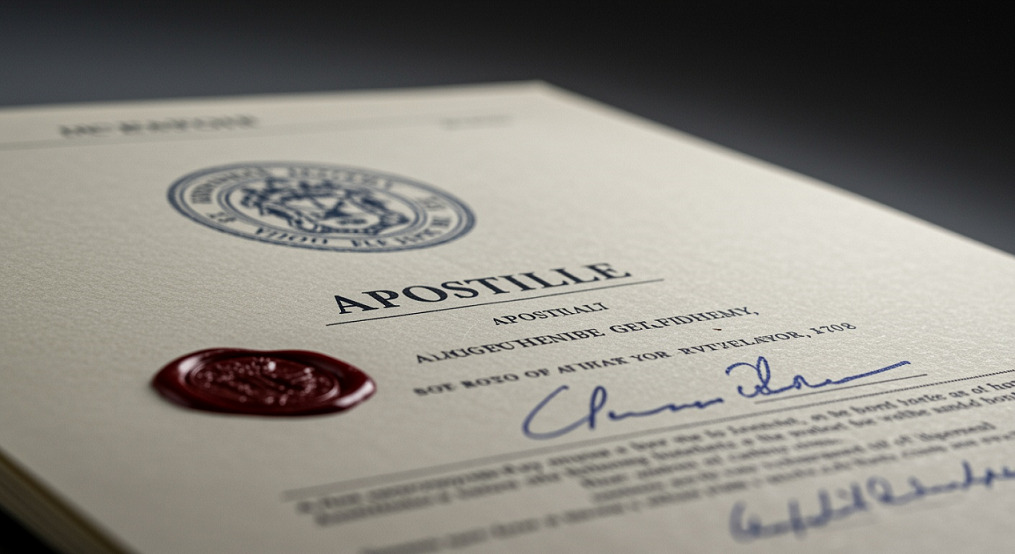
A practical way to understand apostilles is to separate “contract enforceability” from “document authenticity.” An apostille generally supports the authenticity of a public document or a notarized document for use abroad, where the destination country recognizes that process. It does not validate the business terms. It does not confirm that the agreement is fair. It does not eliminate legal defenses.
When people assume it “proves enforceability,” they risk disappointment. A better assumption is that it can help with acceptance hurdles tied to authenticity.
A useful way to frame it internally is:
- The contract controls the deal.
- The apostille supports the cross-border usability of certain papers connected to that deal.
In New Jersey Apostille work, the goal is usually operational: reduce document pushback during overseas review.
Which Contract Papers Get Apostilled?
Cross-border contracts often travel with a supporting pack. The contract may be one document, but the overseas reviewer may care more about the proof behind it. That is where apostille planning becomes relevant, especially when a document will be presented to an authority, a bank, a registry, or a court.
Documents commonly tied to international contract packages include:
- notarized signature acknowledgments attached to contract execution
- powers of attorney authorizing a representative to sign
- board resolutions approving the agreement
- certificates or declarations that will be shown to institutions abroad
- supporting corporate records used during bank or compliance reviews
In many situations, the apostille is applied to the notarized or official record, not necessarily to the contract text itself. In an Apostille In New Jersey context, teams often reduce friction by identifying which documents are likely to be questioned overseas and preparing those carefully.
Where Do Cross-Border Deals Break in Practice?
A good question to ask is: where do cross-border contracts usually get delayed after signing? Most delays are not caused by negotiation. They are caused by administrative and evidentiary requirements that show up after the contract is “done.”
Common points where contracts encounter acceptance problems:
- A foreign bank requests authenticated supporting records
- A distributor or vendor onboarding process demands notarized paperwork
- A regulator asks for proof of corporate authorization
- A court or arbitration process requires documents to be presented with formal authentication
In these moments, a contract can be perfectly clear, yet still be slowed down because the supporting records are not in a format the destination country or institution accepts.
A Contract File That Travels Well

Instead of treating apostilles as a last-minute add-on, many businesses treat the cross-border contract file as a controlled deliverable. The point is not to over-process everything. The point is to prepare the parts that will be relied on abroad.
Here is a practical way to build a cleaner international file:
- decide which documents will actually be presented outside the US
- Confirm whether the destination country accepts apostilles
- separate internal records from foreign-facing records
- Check that names, titles, and entity details are consistent across documents
- Confirm translation expectations early if the receiving side requires it
This is where NJ State Apostille planning can fit into a broader contract workflow without turning the process into a paperwork maze.
A common situation is when someone needs an apostille for signed contract to be used overseas. That usually comes up when the contract, or a related signed record, must be presented to a foreign bank, authority, or counterparty and the goal is to avoid rejection over document formalities.
Evidence, Not Just Agreements
Cross-border enforceability disputes often become evidence disputes. Even if the legal forum is clear, the winning side still needs to present documents in a form that the decision-maker accepts. That is why authentication steps can matter more during disputes than during contract formation.
This can also come up in disputes, where documentation needs to be presented in a form a decision-maker will accept. In those situations, parties often need to authenticate notarized contract for a foreign court so the paperwork is treated as reliable from the start.
Practical evidence-oriented checks include:
- whether notarized signatures were completed correctly
- whether supporting authority documents are clear and properly executed
- whether original documents must be preserved for later presentation
- whether certified copies or translations will be expected
None of this replaces legal strategy, but it reduces the risk of a preventable “paperwork rejection” problem.
Making Enforceability Less Fragile
“Enforceability” becomes more stable when contract teams treat cross-border readiness as part of execution, not a separate afterthought. An apostille does not guarantee enforcement, but it can help certain contract-related records travel with a recognized authentication method where the destination country accepts apostilles. If the contract will be used for banking, regulatory, or dispute purposes abroad, the supporting document package often matters as much as the contract text.
When contracts may later be relied on in a dispute, banking review, or official filing, teams often look closely at apostille requirements for cross-border contract evidence to reduce avoidable objections about authenticity or format.
In an Apostille New Jersey workflow, the most reliable approach is usually disciplined preparation: identify which papers will be relied on abroad, keep the file consistent, and avoid stacking unnecessary steps onto documents that will never leave your internal systems. That is how cross-border contracts become easier to use in practice, even when the legal environment is complex.
Frequently Asked Questions
Question: Does an apostille make a cross-border contract automatically enforceable?
Answer: No. An apostille generally supports authenticity for certain notarized or official documents used abroad in countries that accept apostilles. Enforceability depends on many factors such as governing law, dispute forum, local legal rules, and how the contract is interpreted. Apostilles help reduce document authenticity objections, not guarantee outcomes.
Question: Should the contract itself be apostilled, or only supporting records?
Answer: Often, the documents that need authentication are the notarized or official supporting records, such as powers of attorney, corporate resolutions, or notarized acknowledgments. Whether the contract text itself needs to be part of the apostille pathway depends on what the receiving institution or authority requires and what kind of document is being presented.
Question: What causes cross-border contracts to get rejected by banks or authorities?
Answer: Rejections often come from formal issues rather than the contract terms. Examples include inconsistent company names, unclear signer authority, missing notarization elements, or failure to provide documents in the authenticated format the receiving party expects. Translation and original-document expectations can also create delays if discovered late.
Question: How should businesses decide which documents to prepare for overseas use?
Answer: Start by identifying which documents will actually be presented abroad and who will review them. Then confirm whether the destination expects apostilles, certified copies, translations, or originals. Keep the file consistent and avoid over-processing internal documents that will never be used outside your organization.
Question: Is it risky to assume every country follows the same apostille process?
Answer: Yes. Requirements can vary by destination country and by the institution reviewing the documents. Some countries accept apostilles under a recognized framework, while others require different authentication routes or additional steps. It is safer to confirm expectations before the contract file is sent overseas.
