
 Free Consultation

Intellectual property licensing can look straightforward on paper and still become difficult once the agreement has to function inside a volatile market. Political instability, sudden regulatory changes, banking restrictions, administrative slowdowns, and weak local enforcement can all affect how licensing documents are received and relied on. In that setting, the challenge is not limited to protecting the value of the IP itself.
It also involves making sure the supporting records behind the arrangement can be presented with fewer formal objections. That is where Apostille New Jersey issues can become relevant in a licensing context. An apostille does not remove political or commercial instability, but it can help certain notarized or official documents carry a more recognizable form of authentication abroad. In this blog, we are going to study how apostilles relate to international IP licensing, why unstable jurisdictions raise additional document concerns, and what companies should examine before sending licensing-related paperwork across borders.
How Cross-Border Licensing Gets Harder
Domestic licensing usually depends on commercial clarity, payment terms, territory definitions, and performance obligations. International licensing adds another layer. The agreement may have to interact with foreign ministries, customs agencies, tax offices, regulators, banks, courts, or local record systems that are less predictable than the parties expected at the drafting stage.
That is why unstable jurisdictions create a different risk profile for IP licensing. The concern is not only whether the contract is well-written. The concern is whether the document package surrounding the arrangement will be accepted, processed, and trusted in an environment where administrative inconsistency may already be high.
This matters particularly when:
- A local licensee must present supporting records to a regulator
- Royalty payment channels are tightly monitored
- import, manufacturing, or distribution rights depend on local approvals
- The licensor must prove signer authority or corporate approval abroad
In these situations, documentary weakness can become a business obstacle long before any true dispute begins.
What Licensing Paperwork Gets Questioned

An IP licensing arrangement rarely stands alone. Even if the license agreement is the headline document, other records often matter just as much once the file enters a foreign review process. In less stable jurisdictions, these surrounding documents may be examined more cautiously because institutions want proof that the transaction papers are genuine and properly authorized.
Documents that may attract closer attention include:
- corporate resolutions approving the license
- powers of attorney used for local signing or filing
- notarized declarations tied to ownership or authority
- certificates supporting the company’s legal status
- authorizations used in distribution, manufacturing, or registration steps
- related records submitted to banks or regulators
In a New Jersey Apostille context, these are often the documents that raise the practical question of foreign usability. A licensing strategy may be commercially sound, yet still encounter trouble if the records behind it are viewed as incomplete, inconsistently signed, or insufficiently authenticated for international reliance.
Why Volatile Markets Demand More Proof
Jurisdictional instability changes the way paperwork is handled. In a more predictable market, a reviewer may focus on routine compliance. In a fragile or rapidly shifting environment, the same reviewer may place heavier emphasis on formal proof, internal consistency, and document origin. That can make even ordinary licensing records feel high stakes.
Apostilles become relevant here because they can help answer one narrow but important concern: whether certain documents issued or notarized in one place can be presented in another with a recognized authentication step attached. That does not guarantee smooth acceptance, and it certainly does not solve problems tied to sanctions, corruption, policy swings, or weak enforcement. Still, it can reduce one category of resistance that unstable jurisdictions often amplify: distrust of document authenticity.
This becomes especially relevant when:
- agencies process paperwork unevenly
- Local banking channels require stricter document support
- Enforcement bodies want stronger proof of corporate authority
- Business partners operate cautiously because the legal climate is shifting
In Apostille in New Jersey, matters connected to licensing, the goal is usually not to make the agreement stronger in substance. The goal is to make selected records easier to present with credibility when the receiving environment is already unsettled.
When Do Licensing Deals Need Apostilles?
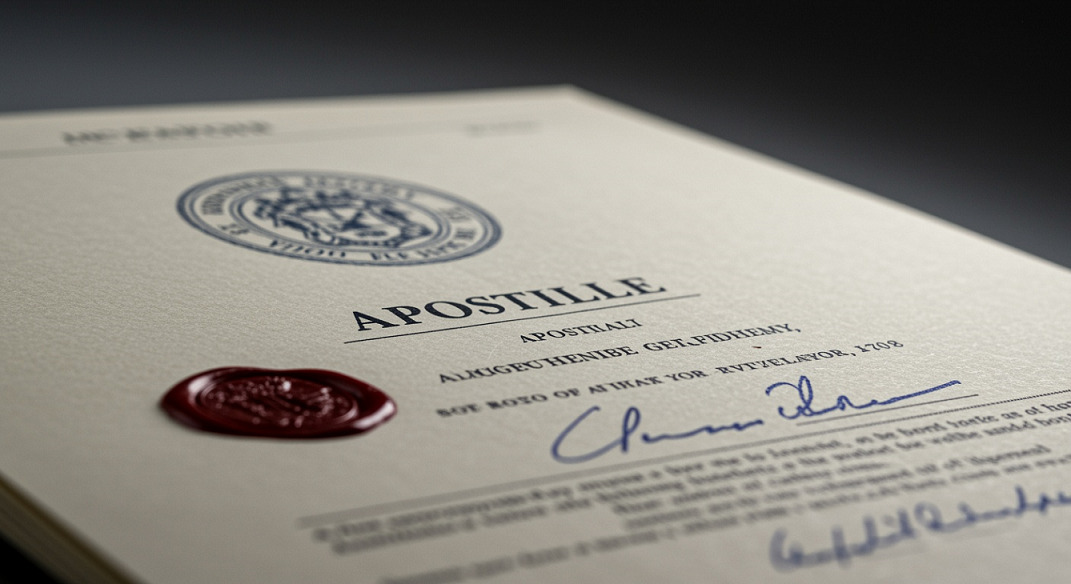
A common question in this area is do IP licensing agreements need an apostille. In practice, the answer depends on the destination country, the institution handling the file, and the exact role the document will play. Sometimes the licensing agreement itself is the focus. In other situations, the agreement matters less than the corporate approvals, powers of attorney, or notarized supporting records attached to it.
That is why companies should resist using a single rule for every international license. The more useful approach is to identify which documents will actually leave the United States, which ones will be reviewed abroad, and whether the receiving side expects apostille treatment or some other form of authentication.
Questions worth settling early include:
- Which documents will be shown to foreign authorities or counterparties?
- Is the destination country using an apostille framework?
- Will local reviewers expect originals, translations, or supporting records?
- Does the file include notarized authority documents that may draw special scrutiny?
The strongest licensing teams plan for those questions before the transaction enters an unstable market rather than after a delay has already begun.
How to Organize a License File for Overseas Use

Preparation often determines whether international licensing paperwork remains manageable. Companies sometimes think of authentication as the final administrative step, but in higher-risk jurisdictions, the real work begins much earlier. If names, titles, dates, corporate approvals, and signer authority are not coordinated at the file level, later authentication does not solve the confusion.
That is why businesses ask how to apostille IP licensing documents in New Jersey when a license must support operations in another country. The answer starts with file discipline. The company first has to separate documents that are merely internal from documents that are likely to be presented abroad. It then needs to check whether those foreign-bound records are final, properly signed, and complete in their notarial or official form before any apostille step is considered.
A practical review often includes:
- matching entity names across the license and its supporting records
- confirming that authority documents reflect the actual transaction structure
- checking that notarized pages are complete and legible
- identifying which records are likely to require translation
- confirming destination expectations before the file is released
In unstable jurisdictions, sloppy preparation is often more damaging than slow preparation.
Where Licensing Paperwork Breaks Down
International IP licenses do not always fail because of major legal flaws. Many problems begin with small disconnects that become larger once the paperwork reaches a stressed or unpredictable system. A signer title may not match the authority certificate. A resolution may refer to an earlier draft. A local reviewer may reject a record that seems perfectly routine in the United States because its form does not match the expectation on the ground.
That is where apostille requirements for international IP licensing agreements become part of risk control rather than a narrow clerical concern. The phrase points to a broader issue: whether the file can withstand administrative scrutiny when the receiving environment is inconsistent, overburdened, or suspicious of foreign-issued records.
Common licensing friction points include:
- mismatched company details across related documents
- unclear authority wording in the attached records
- outdated supporting documents left in the final file
- Incomplete notarization on papers expected to travel abroad
- unplanned translation needs
- assumptions that one country’s standards will apply in another
These issues are easy to underestimate because they do not look commercially dramatic. Yet in unstable jurisdictions, minor paperwork concerns can stall operational rights, royalty flows, or approval timelines.
Keeping Licensing Rights Usable Abroad
In volatile jurisdictions, the strength of an IP license is measured not only by the commercial terms the parties negotiated, but also by whether the paperwork behind those terms can survive foreign scrutiny.
That is the practical role apostilles can play. They do not remove market instability or guarantee enforceability, but they can help certain supporting records travel with a clearer authentication path when they are meant for international use. For licensing arrangements that depend on approvals, local filings, authority proof, or foreign administrative acceptance, that reliability matters. In cross-border IP strategy, the contract language is only one piece; the rest is whether the document package can hold up when it reaches a less predictable administrative and legal environment.
Frequently Asked Questions
Question: What kinds of documents in an IP licensing deal are most likely to raise apostille questions?
Answer: The documents most likely to raise apostille questions are often the supporting records behind the license itself. These can include board resolutions, powers of attorney, authority certificates, notarized declarations, or other papers that may be shown to regulators, banks, customs offices, or foreign business partners. Those records often create more practical friction than the licensing agreement alone.
Question: Does an apostille make an IP license enforceable in an unstable jurisdiction?
Answer: No. An apostille does not make a licensing agreement enforceable by itself, and it does not remove political or legal instability. Its role is much narrower. It helps authenticate certain documents for use in another country where that form of authentication is recognized, which can reduce formal objections tied to document origin.
Question: Why do unstable jurisdictions create extra document risk for licensing deals?
Answer: They create extra risk because institutions in unstable environments may review foreign-issued records more cautiously, process them less consistently, or demand stronger proof of authority and authenticity. That can make ordinary supporting paperwork feel more important than expected, especially when the license depends on local approvals or regulated payment channels.
Question: Are apostilles more relevant when a license involves regulators, banks, or local filings?
Answer: In many cases, yes. The more a licensing arrangement depends on formal institutional review, the more likely it is that supporting documents will face scrutiny. Regulators, banks, and filing authorities often care less about the commercial logic of the deal and more about whether the records presented to them are properly authenticated and reliable.
Question: What should be reviewed before sending IP licensing documents overseas?
Answer: The file should be checked for final versions, matching names and titles, complete notarization where needed, accurate supporting approvals, and any destination-specific requirements such as translations or originals. It is also important to confirm which records will actually be used abroad so that authentication efforts are focused on the right documents.
